
The most authentic way to discover the hidden corners of Istanbul is not through a guidebook or a crowded bus tour. It is by utilizing a private guide who can bypass the tourist queues and navigate the complex backstreets.
Imagine walking through the silent courtyards of Kuzguncuk or entering the weeping columns of lesser-known underground palaces without the noise of the crowds. While the Hagia Sophia and Blue Mosque are undeniable masterpieces, the true soul of this 3,000-year-old metropolis lies in its shadows.
A private guide transforms a chaotic visit into a seamless narrative. They connect the dots between Roman, Byzantine, and Ottoman history while ensuring you never waste a moment waiting in line.
This article serves as your comprehensive blueprint for those secret routes. It is designed specifically for the traveler who demands depth, comfort, and exclusivity.
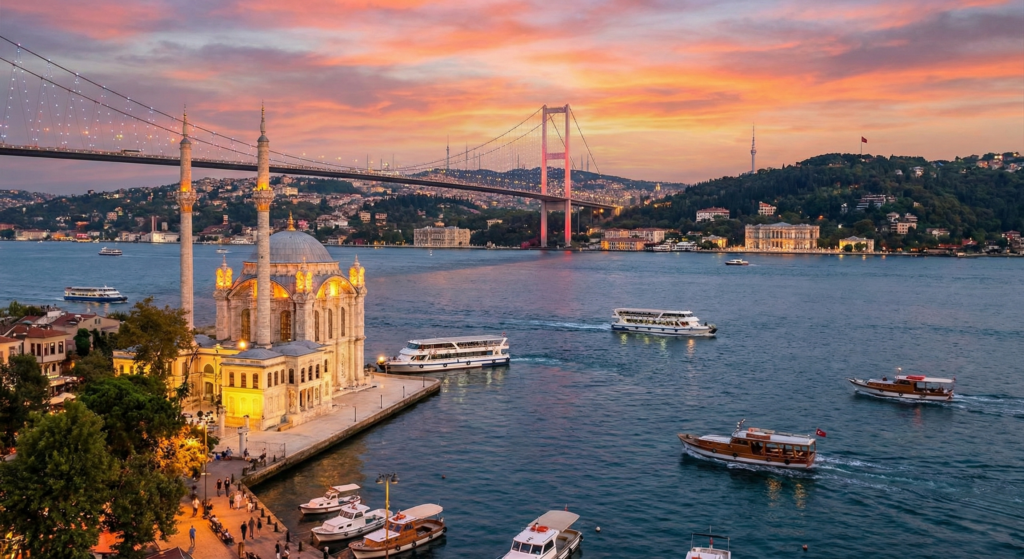
Why a Private Guide is the Key to the Locked City
Istanbul is often described as a bridge between East and West. However, for the uninitiated traveler, it can also be a labyrinth of lost time and missed opportunities.
The primary reason discerning travelers choose a private guide is to unlock the “Invisible City.” This is the layer of Istanbul that exists parallel to the tourist trail but remains invisible to the naked eye. When you book a private tour, you are not merely purchasing a service; you are buying back your time.
A professional guide navigates the complex web of Istanbul’s traffic and ferry schedules with intuitive precision. They ensure that your transition from the European side to the Asian side is not just a commute. It becomes a scenic experience accompanied by historical context that turns a boat ride into a lecture on naval history.
Furthermore, the hidden corners of Istanbul often require specific local knowledge to access safely and respectfully. Many of the city’s most breathtaking Byzantine churches are now nestled within conservative neighborhoods where local etiquette is paramount.
A private guide acts as your cultural diplomat. They bridge the gap between you and the local community, allowing you to enter spaces like the Chora Church or the Pammakaristos Church with confidence. This level of access transforms sightseeing into cultural immersion. You are no longer a spectator behind a glass wall, but a participant in the living history of the city.
The Value of Narrative Depth
Beyond logistics and access, the narrative depth provided by a private guide is crucial. It is the difference between seeing a pile of stones and understanding the fall of an empire.
In a city where a single wall might contain bricks from the Roman, Byzantine, and Ottoman eras, context is everything. A guidebook might tell you that the Galata Tower was built by the Genoese. However, a private guide will take you to the hidden street level below it.
There, they will point out the specific masonry techniques that reveal the desperate defense of the city in 1453. They will lead you away from the overcrowded main square to a rooftop cafe known only to residents.
This personalized storytelling is tailored to your specific interests. Whether you are a military history buff or an architecture enthusiast, every step you take contributes to a cohesive story. The “hidden corners” are not just physical locations; they are the stories that remain hidden until someone knowledgeable shines a light on them.
The Labyrinth of History: Fener and Balat Unveiled
Venturing into the historic neighborhoods of Fener and Balat requires more than just a map. It requires a guide who understands the unspoken rhythm of these streets. These districts serve as a living museum of Istanbul’s cosmopolitan past.
Once the domain of the city’s Greek and Jewish populations, they are now a mesmerizing blend of crumbling grandeur and hipster revitalization. A private guide will steer you away from the Instagram-famous “colored houses” that every tourist flocks to.
Instead, they will lead you up the incredibly steep, cobblestone inclines toward the Phanar Greek Orthodox College. This imposing red-brick structure dominates the skyline, but few know how to access the best vantage points for photographing it.
Your guide will navigate these vertical streets with ease, taking you to the Patriarchate of Constantinople. This is the spiritual center of the world’s 300 million Orthodox Christians. Here, inside the Church of St. George, you will stand before sacred relics and a darker, wood-carved iconostasis.
The true hidden gem here is not just the church itself, but the surrounding streets. The architecture tells the story of a wealthy merchant class that has long since vanished.
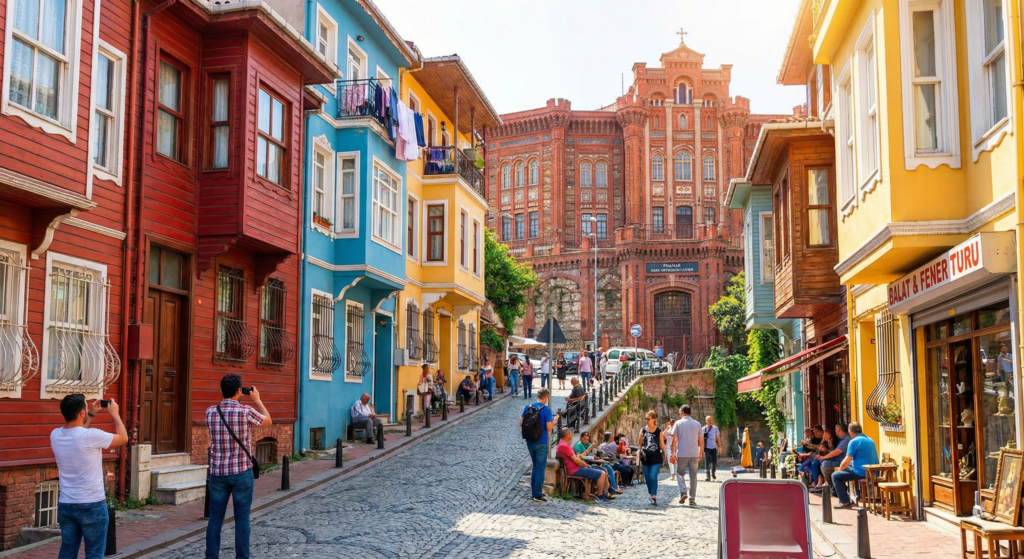
Deciphering the Streets of Balat
As you descend from the heights of Fener into the heart of Balat, the atmosphere shifts palpably. This is where a private guide proves indispensable in decoding the layers of urban transformation.
Balat is a neighborhood of contradictions. Antique auction houses sit next to traditional tea gardens and modern art galleries. Without a guide, it is easy to get caught in the tourist trap cafes that line the main street.
However, a local expert will lead you through the narrow gaps between buildings to discover hidden courtyards (avlusu). Here, locals gather to play backgammon and discuss politics, just as they have for generations.
They will introduce you to the deeper history of the Ahrida Synagogue, one of the oldest in the city. You will learn about the significance of its boat-shaped bimah, which symbolizes Noah’s Ark and the galleys that brought the Sephardic Jews to freedom.
This depth of engagement is impossible to achieve on your own. Access to such sites is often restricted or requires prior arrangement, a logistical hurdle your guide will have cleared long before your arrival.
The walk through Balat is not merely a visual tour; it is a sensory overload. You will smell freshly baked simit, roasting coffee, and damp masonry. Your guide will help you interpret these scents, ensuring you stop at the correct “esnaf lokantası” (tradesmen’s restaurant) for an authentic meal.
Crossing Continents: The Silence of Kuzguncuk
Most visitors to Istanbul never leave the European side. They believe that the Sultanahmet and Beyoğlu districts contain all the city’s highlights. But a private guide knows that the Asian side offers a tranquility that has largely vanished from the tourist centers.
The journey begins with a ferry ride—an essential Istanbul experience in itself. Your guide will point out the silhouette of the city receding behind you, identifying the Seven Hills of Constantinople from the water.
Upon landing in Üsküdar, you will bypass the chaotic bus terminals and head straight for Kuzguncuk. This neighborhood feels like a village frozen in time. It is a testament to the peaceful coexistence that once defined the empire, with a mosque, a church, and a synagogue standing shoulder to shoulder.
A private guide is essential here to explain the subtle architectural differences. You will see wooden Ottoman mansions (yalı) lining the Bosphorus and inland row houses that reflect a European influence. Walking through Kuzguncuk is like walking through a film set, yet it remains deeply authentic.
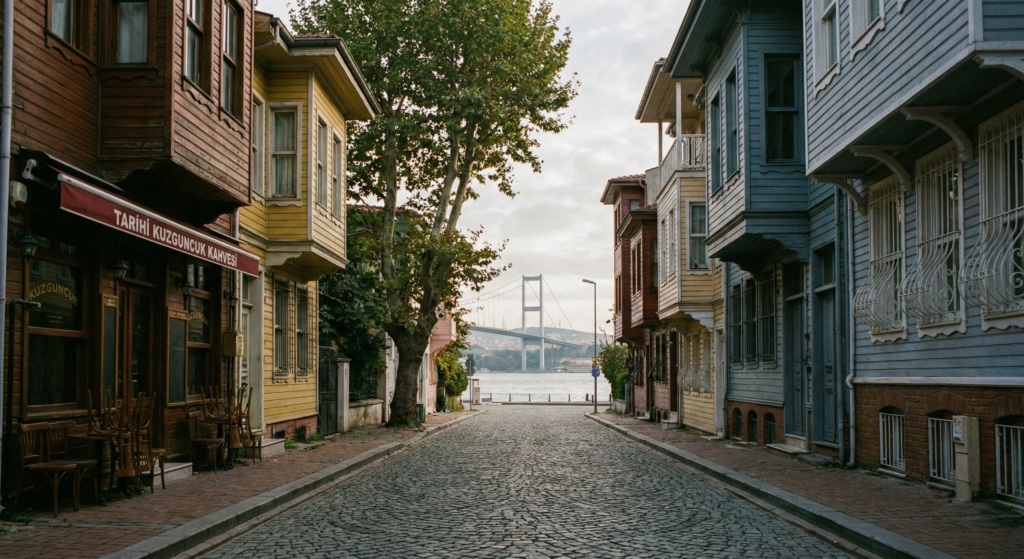
The Village Life of the Asian Side
In Kuzguncuk, the pace of life slows down. This allows for a deeper connection with the local culture that is often rushed on the European side.
Your guide will take you to the best-kept secret of the neighborhood: İcadiye Street. Shaded by massive plane trees, this street forms a green canopy over the road. Here, you will not find souvenir shops selling cheap magnets.
Instead, you will find bookstores that double as cafes. You will visit bakeries that have been using the same sourdough starter for decades. The hidden corner here is often a conversation.
Your guide, fluent in the local dialect and customs, can facilitate interactions with the residents. This allows you to ask questions about life in this unique enclave. They will explain the concept of mahalle (neighborhood) culture, where trust is the currency of the street.
Moving further south towards Kadıköy and Moda, the vibe shifts from nostalgic to vibrant. This is the culinary heart of modern Istanbul. A private guide will navigate the labyrinthine fish market of Kadıköy, steering you toward the best stalls.
They will ensure you taste the freshest lakerda (salted bonito) and pickle juice. These are distinct flavors that define the Istanbul palate. Finally, they will take you to hidden rooftop bars in Moda that offer a panoramic view of the Sea of Marmara.
Beneath the Surface: Cisterns and Dungeons
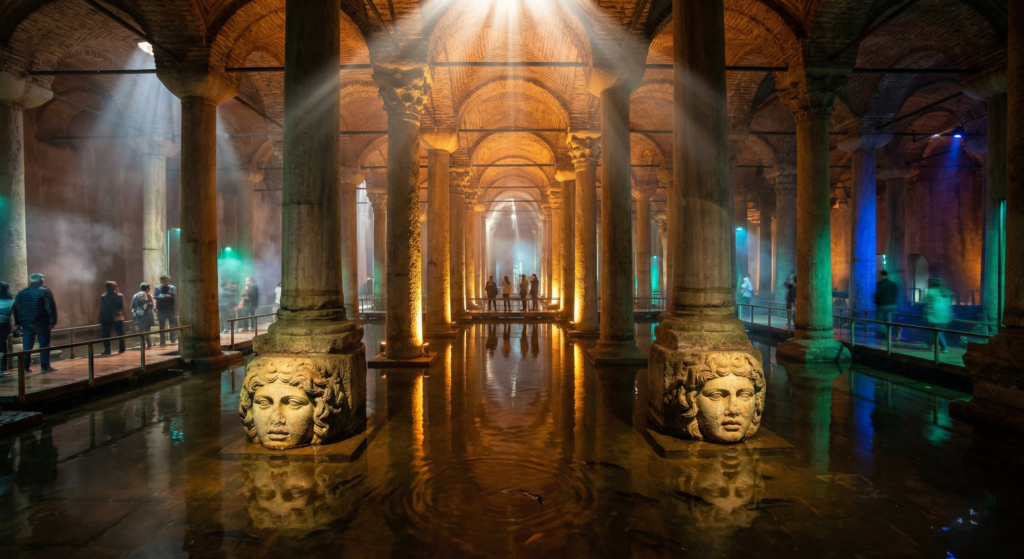
While the Basilica Cistern is magnificent, it is also perpetually crowded. Lines can stretch for hours during peak season, detracting from the mystical atmosphere.
A knowledgeable private guide will suggest alternative, hidden underground sites. These locations offer an equally impressive experience without the crushing crowds. One such gem is the Theodosius Cistern (Şerefiye Sarnıcı).
This cistern has been meticulously restored and often hosts light mapping shows. Because it is less known to the mass tourism market, you can often explore it in relative silence. You will appreciate the architectural genius of the Romans who built the city’s water system.
Your guide will explain the engineering marvels behind these structures. You will learn how water was transported from the Belgrad Forest via the Valens Aqueduct to store millions of liters beneath the city streets.
Secrets of the Walls
But the underground secrets of Istanbul extend far beyond the cisterns. There are hidden dungeons in the Yedikule Fortress, the Castle of the Seven Towers. This is where foreign ambassadors and rebellious sultans were once imprisoned.
A private guide can arrange a visit to this imposing structure. You will walk along the ancient land walls of Constantinople, which stood impregnable for a thousand years. Your guide will point out the specific sections where the Ottoman forces finally breached the defenses in 1453.
You can walk upon the ramparts, looking out over the Sea of Marmara. You will stand on the very stones where history was written in blood and iron.
Furthermore, beneath many of the carpet shops and hotels in Sultanahmet lie the ruins of the Great Palace of Constantinople. Access to these areas is only possible for those who know which door to knock on. A well-connected private guide often has personal relationships with shop owners who have preserved these ruins.
Accessing these “private museums” is the ultimate hidden corner experience. It offers a glimpse into the domestic grandeur of the Byzantine emperors that cannot be found in public museums.
The Grand Bazaar from Above: A Secret Perspective
While the labyrinthine alleys of the Grand Bazaar are mesmerizing, the true secret lies above them. Most visitors never realize that the roof of this massive complex is a world of its own.
A private guide can unlock the doors to the Büyük Valide Han. This is one of the oldest commercial inns in the city. The staircase is worn and narrow, hidden in a dark corner that you would likely pass by without a second glance.
Climbing these stairs leads you to the rooftops. Here, you are greeted with a view that is nothing short of cinematic. You see the domes of the bazaar stretching out like a sea of lead and stone, punctuated by the minarets of Nuruosmaniye Mosque.
This is the exact spot where James Bond rode a motorcycle in Skyfall. But for you, it is a moment of pure silence above the chaos. It is a photographer’s dream and a memory that defines the exclusivity of a private tour.
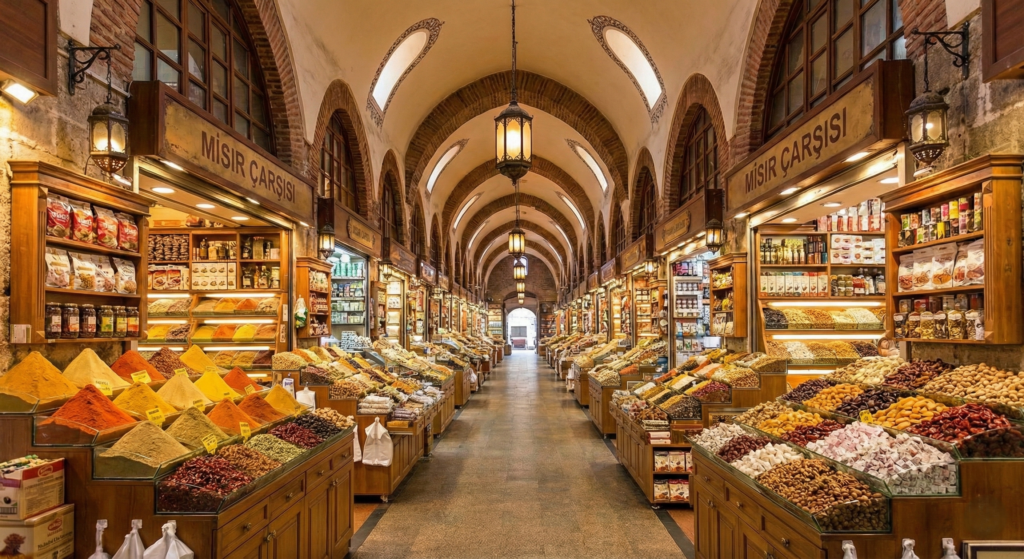
The Alchemist’s Workshop
Back down in the depths of the bazaar, your guide will steer you away from the shiny storefronts. You will head into the Kalcılar Han, the foundry district.
This area is raw and authentic. It smells of metal dust and tea. Here, artisans are melting gold and silver in furnaces that have been burning for centuries.
You are not here to buy trinkets. You are here to witness the transmutation of raw metal into art. Your guide acts as a bridge, allowing you to ask the masters about their craft.
Seeing a master craftsman shape a diamond ring by hand, using tools inherited from his grandfather, changes how you view the object. It transforms a simple purchase into a story of heritage. This is the “hidden corner” of commerce that mass tourism can never touch.
Conclusion: The Ultimate Investment in Memory
Istanbul is not a city that reveals itself easily. It is a city of layers, secrets, and whispers. To try and conquer it with a guidebook is to scratch only the surface.
You might see the monuments, but you will miss the soul. You might walk the streets, but you will miss the stories etched into the stones.
Booking a private guide is not an expense; it is an investment. You are investing in your own time, ensuring that every hour spent in this magical city is rich with meaning.
You are investing in comfort, bypassing the stress of logistics and lines. Most importantly, you are investing in connection—connecting with the real people, the real flavors, and the real history of Istanbul.
Are you still weighing the benefits of a personalized experience against standard options? Understanding the logistical and experiential differences is crucial before booking your trip. To help you make the best choice for your budget and travel style, we have prepared a detailed breakdown. Read our comprehensive guide on Private Istanbul Tours vs. Group Tours to discover exactly what you gain when you choose exclusivity over the crowd.


