
The Ideal Window
If you are looking for the absolute best time to visit Ephesus, the consensus among travel experts and archaeologists is clear: aim for the shoulder seasons of April through May or October through November.
During these specific windows, the Aegean climate offers a perfect equilibrium. The weather is pleasantly warm, averaging between 18°C and 25°C (64°F – 77°F). This allows you to explore the extensive open-air ruins without the physical exhaustion caused by the summer heat.
Furthermore, these months avoid the peak density of the massive cruise ship crowds, granting you the space to appreciate the history in a calmer, more atmospheric setting. However, every season holds its own unique charm, and with the right strategy, Ephesus is a spectacular destination year-round.
Ephesus is not just a tourist attraction; it is a registered UNESCO World Heritage Site that requires careful preservation.
Why Timing Your Ephesus Visit is Crucial
Visiting the ancient city of Ephesus is a bucket-list experience for history enthusiasts worldwide, but the quality of that experience is heavily dictated by the calendar. Unlike visiting the Louvre or the British Museum, where the environment is climate-controlled, Ephesus is a sprawling, open-air archaeological site. Here, you are fully exposed to the elements.
The city is constructed almost entirely of white marble and limestone. While beautiful, these materials act as natural reflectors. In the height of summer, the marble absorbs and radiates the sun’s heat, often making the ambient temperature feel significantly higher than the forecast suggests.
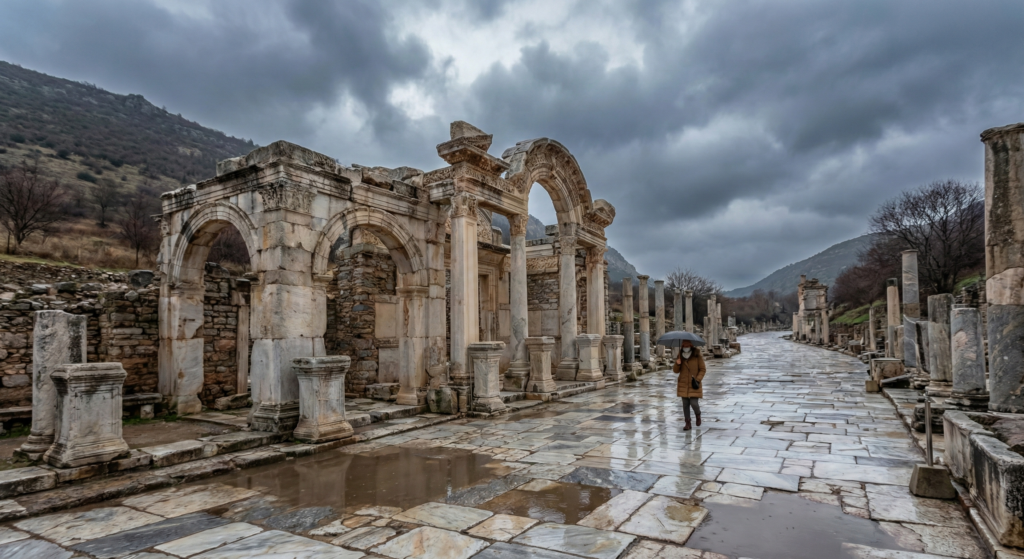
Conversely, in the depth of winter, the open valley leaves the ruins exposed to winds and rain, turning the polished ancient streets into slippery pathways. Therefore, asking “When is the best time to visit?” is not just a logistical question; it is the most important decision you will make to ensure your comfort and enjoyment.
Ultimately, understanding the climate patterns is key to deciding the Best Time to Visit Ephesus for your specific needs.
Spring at Ephesus: A Botanical and Historical Rebirth (March, April, May)
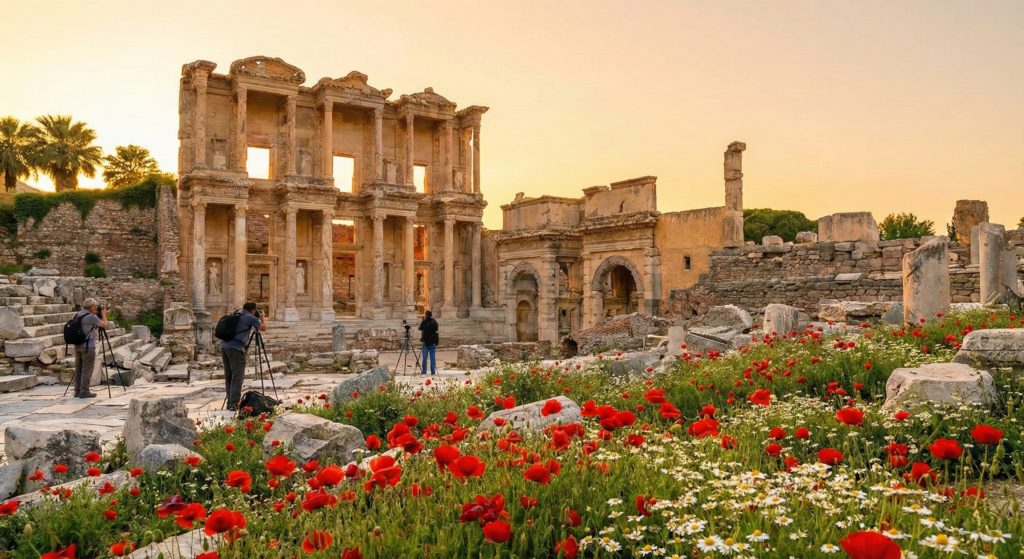
Spring is widely regarded as the most magical time to walk the Curetes Street. As the harshness of winter recedes, the entire region undergoes a vibrant transformation that adds a layer of natural beauty to the architectural wonders. The surrounding hills of Selçuk turn a vivid green, and the archaeological site itself comes alive with color. Many seasoned archaeologists agree that this vibrant rebirth makes spring the Best Time to Visit Ephesus for nature lovers. You can always check the official weather forecasts from the Turkish State Meteorological Service before packing.
This is not merely a poetic description. The juxtaposition of wildflowers—red poppies, yellow daisies, and purple thistles—growing between the cracks of the ancient white marble columns creates a photographic contrast that is unavailable at any other time of year. For photography enthusiasts, the soft, diffused light of spring provides excellent conditions throughout the day, avoiding the harsh shadows typical of summer.
By April and May, the weather has usually stabilized into a delightful pattern. The likelihood of rain decreases significantly, and the days are long and sunny without being oppressive. This is the “Goldilocks” zone of travel weather—warm enough to wear a t-shirt, yet cool enough to hike up to the Terrace Houses or the Great Theatre’s upper tiers without breaking a sweat.
Furthermore, while the tourist season officially begins in April, the site has not yet reached the saturation point seen in mid-summer. This means you can often find moments of solitude in the Library of Celsus. It is also worth noting that the “International Ephesus Festival of Culture and Art” typically takes place in May, adding a layer of modern cultural richness to your historical visit.
Summer at Ephesus: Navigating the Peak Season (June, July, August)
Visiting Ephesus during the summer months is the reality for the majority of travelers due to school holidays and global cruise ship schedules. While this is undoubtedly the busiest and hottest time of year, it is still possible to have a wonderful experience if you strategize correctly with a professional guide. While high temperatures are a challenge, for those who love bustling energy and long days, summer can still be the Best Time to Visit Ephesus.
The summer months bring a vibrant energy to the region. The nearby town of Kuşadası is bustling, the beaches are inviting, and the days are long, offering maximum daylight hours for exploration. However, travelers must be rigorously prepared for the heat. July and August can see temperatures soaring above 35°C (95°F). As mentioned earlier, the lack of shade and the reflective marble can make a midday tour physically demanding.
If you must visit during the summer, the strategy for a successful trip changes from “what month” to “what time of day.” This is where the value of a private Ephesus tour becomes undeniable.
Large tour groups from cruise ships typically arrive in waves between 10:00 AM and 2:00 PM, creating bottlenecks at key structures. To avoid this, a summer visit should be planned for the early morning (right at opening time, usually 08:00 AM) or late afternoon. Late afternoon visits in summer are particularly underrated. As the sun begins to lower, the crowds disperse back to their ships, the heat breaks, and the golden hour light bathes the ruins in a spectacular amber glow.
Autumn at Ephesus: The Sophisticated Choice (September, October, November)
As the frenetic energy of the peak summer season dissipates, Ephesus enters what many experienced guides consider the most sophisticated time for a visit. Autumn in the Aegean is prolonged and gentle.
September can still feel quite summery, often retaining the heat of August, but by October, the air cools down to a delightful crispness. This season offers a similar climatic advantage to spring but with a distinctively different atmosphere. The days are getting shorter, but the sea temperatures remain warm from the long summer, meaning visitors can easily combine a morning of historical exploration with a relaxing afternoon swim.
October and November are ideal for travelers who prioritize learning and detail over quick snapshots. Because the crowds thin out significantly especially the large shore excursion groups the pace of the site slows down.
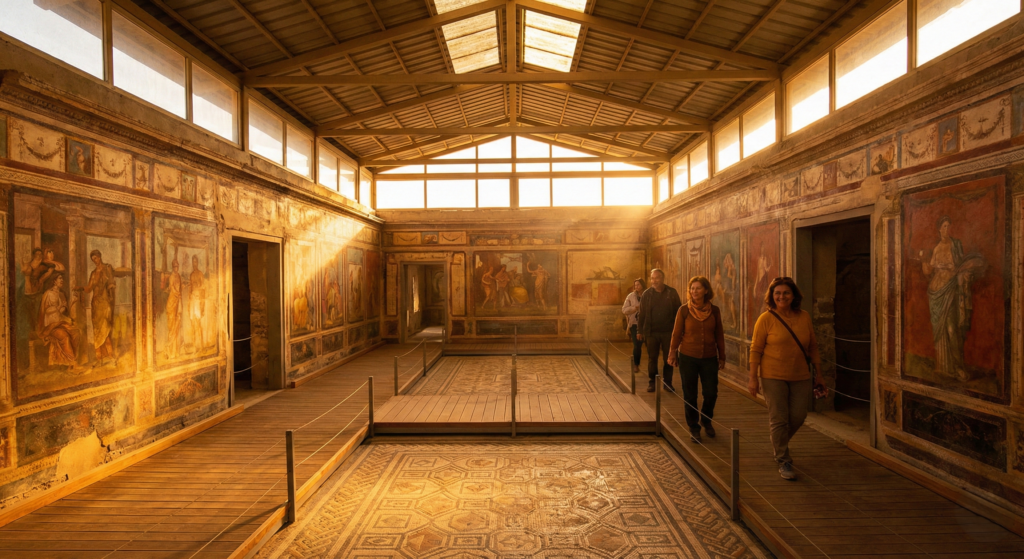
Guides have more time to explain the intricate details of the Terrace Houses frescoes or the architectural marvels of the Library without being jostled by passing groups. The autumn light is also notably clearer and less hazy than in summer, providing crisp visibility. For those interested in religious history, autumn is a peaceful time to visit the nearby House of the Virgin Mary, allowing for a quieter, more spiritual experience. If you want to combine spiritual exploration with historical discovery, autumn is undoubtedly the Best Time to Visit Ephesus.
Winter at Ephesus: Solitude and Atmosphere (December, January, February)
Winter is the secret season of Ephesus, often overlooked by mainstream tourism but beloved by those seeking solitude. It is true that the weather is unpredictable during these months; you may encounter rain, and temperatures can drop to around 10°C (50°F). Therefore, if avoiding other tourists is your top priority, winter is the Best Time to Visit Ephesus.
However, the trade-off is an almost empty ancient city. Imagine standing on the vast stage of the Great Theatre, capable of holding 25,000 people, and being the only person there. The acoustic silence and the moody, dramatic skies create an atmospheric experience that feels almost cinematic. For the true history buff, this lack of distraction allows for a profound connection with the past.
Visiting in winter requires practical preparation—waterproof shoes and layers are essential—but it rewards you with a sense of exclusivity. This is also the most budget-friendly time to visit, as flights and accommodation prices in the region drop significantly.
For serious history buffs, academics, or those who simply dislike crowds, winter offers the luxury of time and space. You can stand in front of the Library of Celsus for as long as you like, studying every statue and inscription without needing to step aside for others to take a selfie. It is an intimate, raw encounter with history that the polished summer season cannot replicate.
The Daily Rhythm: Morning Clarity vs. The Golden Hour
Choosing the right hour of the day is just as important as picking the Best Time to Visit Ephesus in terms of months. Once you have selected the ideal month for your trip, the next layer of planning involves choosing the specific time of day to enter the gates. The atmosphere of Ephesus shifts dramatically as the sun moves across the sky.
The early morning hours, specifically right when the gates open at 08:00 AM, offer a pristine clarity. The air is typically still, and the light is cool and crisp. Entering at this time allows you to walk down the Curetes Street before the noise of the day begins. It provides a rare opportunity to capture wide-angle shots of the Celsus Library without strangers wandering into your frame.
Conversely, the late afternoon “Golden Hour” offers a completely different, yet equally mesmerizing experience. As the sun begins to dip towards the Aegean Sea, the white marble of the ruins reflects a warm, amber hue. This is the most romantic time to be in the city.
The shadows lengthen, accentuating the reliefs on the Temple of Hadrian and the depth of the Great Theatre. Furthermore, most of the large cruise ship groups begin their departure around 3:00 PM. If you arrive around 4:00 PM in the summer or spring, you will find the site emptying out, leaving you to enjoy a cooler, quieter, and visually stunning walk through history.
The Impact of Cruise Ships: How to Beat the Crowds
To truly master the timing of your visit, one must understand the unique logistics of the region. Kuşadası, the gateway to Ephesus, is one of the busiest cruise ports in the Mediterranean. On days when three or four mega-ships dock simultaneously, the population of the ancient city can swell by thousands within an hour.
This phenomenon, known locally as the “Cruise Ship Effect,” creates bottlenecks at popular structures like the Gate of Hercules. This is where the value of a professional local guide becomes undeniable.
An experienced guide monitors the port schedule and knows exactly when the waves of groups will arrive. They can reverse the route of your tour, starting from the lower gate instead of the upper one, or time your visit to the Terrace Houses to coincide with the lull in crowds. This insider knowledge transforms a chaotic visit into a smooth, seamless journey. Consulting with a local expert helps you navigate these schedules, ensuring you choose the Best Time to Visit Ephesus to avoid the crush.
Essential Preparation: What to Wear for Comfort
A common mistake many travelers make is underestimating the terrain of Ephesus. This is an ancient city that has been exposed to the elements for millennia. The marble streets, polished by the footsteps of millions of visitors over centuries, are incredibly smooth and can be slippery even when dry—and treacherous when wet.
Therefore, regardless of the season, footwear is your most important tool. High heels or flip-flops are dangerous and uncomfortable. Visitors should opt for broken-in walking shoes or sneakers with good grip.
Even if you choose the Best Time to Visit Ephesus regarding weather, the wrong footwear can ruin the experience.
7 Common Mistakes Tourists Make in Ephesus (And How a Guided Ephesus Tour Solves Them)
In the height of summer, breathable fabrics like linen and cotton are lifesavers. It is also worth noting that shade is a luxury in Ephesus. There are very few trees within the main excavation area, so a wide-brimmed hat and quality sunglasses are not merely accessories but essential health protections against the glare of the white stone.
Don’t Leave Your Vacation to Chance
Let us handle the details so you can focus entirely on the magic of the ancient world. Contact us today, and let’s craft an itinerary that guarantees you the Best Time to Visit Ephesus, no matter when you travel. Don’t leave your vacation to chance.


